

How to Find Rare Back Issue Comics: A Collector's Guide
Posted by EDITORIAL TEAM

Table of Contents
- What Makes a Comic Rare (And Why Rare Doesn't Always Mean Valuable)
- Where to Search for Rare Back Issue Comics Online and In Person
- How to Identify Key Issues and First Appearances
- A Comic Book Grading Guide: Raw vs. Professionally Graded Comics
- Building a Want List and Searching by Issue Number, Variant, and Year
- Watching New Inventory and Looking Beyond Hot Books
- Common Mistakes When Hunting Hard-to-Find Comics
- Conclusion
- Frequently Asked Questions
Last Updated: October 1, 2026
What Makes a Comic Rare (And Why Rare Doesn't Always Mean Valuable)
Learning how to find rare back issue comics starts with understanding what "rare" actually means, because rarity and value are two different things. A comic is rare when few copies still exist, usually because of a low print run, limited distribution, or attrition over decades. Value depends on demand.

Low Print Runs, Newsstand Editions, and Recalled Copies
Print run is the total number of copies a publisher produced for a given issue. A low print run creates scarcity, but only if the book also has demand behind it.
Several factors push a book toward genuine rarity:
- Newsstand editions, sold at drugstores and newsstands rather than comic shops, often had smaller distribution and higher return rates
- Recalled or corrected editions, pulled for printing errors or content changes, leave fewer copies in circulation
- Later printings can be scarcer than first printings in some cases, though first printings usually carry more collector interest
- Variant covers with limited distribution create their own micro-markets within a single issue
Condition Scarcity: When Few Copies Survive in High Grade
A book can be common in low grade and genuinely hard to find in high grade. Collectors call this condition scarcity, one of the most overlooked drivers of value in comic collecting. Vintage comics were printed on cheap paper and stored poorly, so surviving Near Mint copies may number in the dozens even when the original print run was large.
Where to Search for Rare Back Issue Comics Online and In Person
The most reliable places to find rare back issue comics are large online dealer inventories, comic conventions, local shops, estate sales, and live auctions. Each channel has different strengths.
Online Comic Stores and Dealer Inventories
Online comic stores with deep back-issue catalogs are the fastest way to search a specific issue by title, number, and grade. Large dealer inventories matter: a shop carrying 100,000+ comics is far more likely to have that odd 1980s issue you need than a small store with a few hundred books. Ron's Comic Closet maintains exactly this kind of deep back-issue selection and adds new inventory regularly.

Conventions, Local Shops, Estate Sales, and Live Auctions
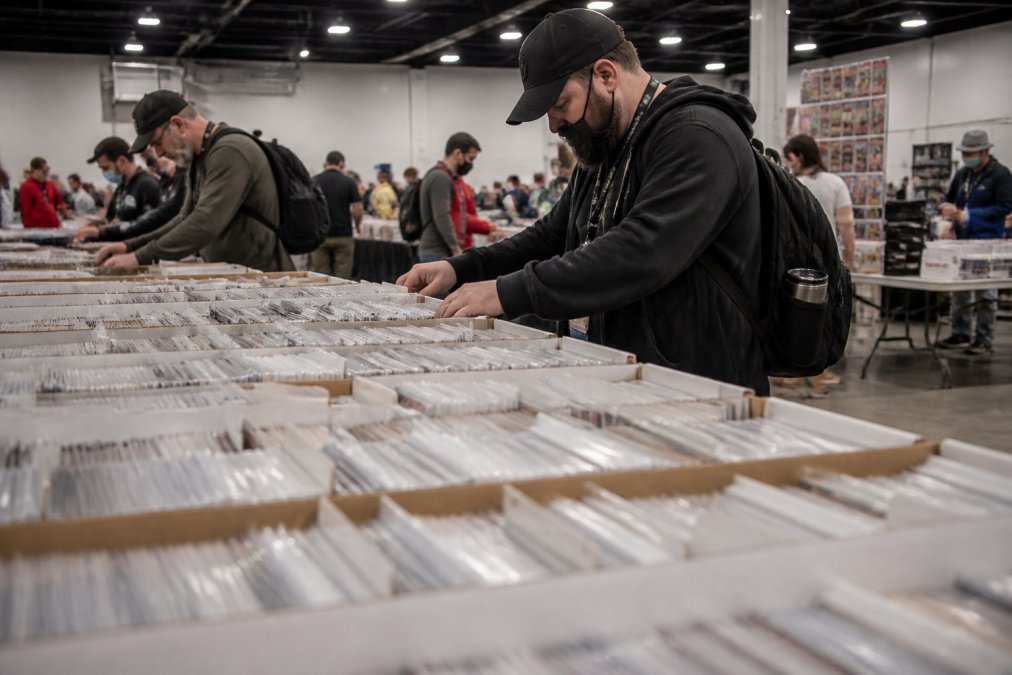
Conventions put hundreds of dealers in one room, compressing months of hunting into a weekend. Local shops remain the best source for dollar bins and books that never make it online. Estate sales and live auctions surface whole collections at once, but demand fast decisions and careful inspection before you bid.
| Source | Best For | Watch Out For |
|---|---|---|
| Online dealer stores | Specific issue searches | Condition must be verified |
| Comic conventions | Browsing and bulk finds | Crowds, impulse buys |
| Local shops | Dollar bins, hidden gems | Limited inventory depth |
| Estate sales | Whole collections | No returns, as-is sales |
| Live auctions | High-grade keys | Bidding wars, buyer premiums |
How to Identify Key Issues and First Appearances
Identifying key issues and first appearances requires research, not guesswork. A key issue is any comic with historical significance: a first appearance, an origin story, a death, a major creator debut, or a low-print milestone. To identify them, cross-reference multiple sources: publisher information confirms what appeared in a given issue, comic databases document first appearances, and documented sales records show what copies actually sold for, far more reliable than asking prices.
A Comic Book Grading Guide: Raw vs. Professionally Graded Comics
A comic book grading guide boils down to one question: should you buy the book raw or professionally graded? Raw comics are unencapsulated and graded by eye. Professionally graded comics, often called slabbed or certified copies, have been evaluated and sealed by a third-party grading service with a numeric grade on a 10-point scale, from 0.5 (Poor) to 10.0 (Gem Mint).
What Graders Actually Examine
Professional grading is not just a cover inspection. Graders evaluate the whole book against a consistent standard:
- Cover gloss and reflectivity, which fade with handling and light exposure
- Spine stress and color breaks, the most common grade-limiting defect
- Corner sharpness, since rounded corners cap the achievable grade
- Page quality and color, including brittleness and tanning from age
- Centering and cover alignment, which affect eye appeal
- Interior completeness, including centerfold attachment and coupon cutouts
- Restoration detection, using tools like ultraviolet light to spot color touch, trimming, and piece replacement
The Real Trade-Offs of Slabbing
Slabbing is not automatically the right move. Weigh both sides:
| Factor | Raw | Professionally Graded |
|---|---|---|
| Upfront cost | Lower | Higher, plus shipping and turnaround time |
| Grade certainty | Your own judgment | Third-party verified grade |
| Interior access | Full | None once encapsulated |
| Resale confidence | Buyer must trust your grade | Buyer trusts the label |
| Risk on high-value keys | Higher | Lower |
| Best for | Reading copies, mid-grade books, bulk runs | High-value keys, resale, insurance documentation |
When Grading Makes Sense, And When It Doesn't
Grading is usually worth considering when the book is a genuine key issue, when the raw grade is likely high enough that certification adds meaningful value, or when you need documented condition for insurance or a large sale. It usually does not make sense for reading copies, low-grade commons, or books where the grading cost would approach the book's own value.
Heathen Vault Reserve Edition #1 →
Common Condition Issues: Spine Ticks, Creases, and Restoration
Condition issues fall into two buckets: wear and restoration. Wear happens naturally; restoration is deliberate alteration and changes everything about a book's value.
- Spine ticks: small stress marks along the spine, common on books that were read
- Creases: color-breaking bends that drop a grade fast
- Tears and stains: physical damage that is often irreversible
- Missing pages or detached covers: major structural defects
- Staple problems: rust, replacement, or popped staples
- Restoration: color touch, trimming, or piece replacement, which must be disclosed
Building a Want List and Searching by Issue Number, Variant, and Year
A want list is the backbone of efficient comic book hunting. Instead of browsing aimlessly, you search with precision: title, issue number, volume or year, publisher, and variant.
- Title and volume or year of publication
- Exact issue number
- Publisher, since the same title can move between publishers
- Variant cover artist or ratio, if applicable
- Target grade and acceptable condition floor
- Maximum price you will pay
Watching New Inventory and Looking Beyond Hot Books
Watching newly added inventory beats chasing whatever is trending this week. Hot books attract every buyer at once, driving prices up and margins down. Monitor a store's new arrivals and check back often, because fresh listings are where under-the-radar finds appear before the crowd notices. Looking beyond hot books also means paying attention to reprints, fanzines, and monographs that serious collectors value but casual buyers ignore.
Common Mistakes When Hunting Hard-to-Find Comics
The biggest mistakes in comic book hunting come down to skipping verification. Buying on hype, trusting a grade without inspecting, and ignoring provenance are the three fastest ways to overpay. Here is a verification workflow to run on any high-value find before money changes hands.
A Step-by-Step Authentication and Provenance Check
Provenance is the documented history of a book's ownership and authenticity. For high-value purchases, ask where the book came from and whether there is paperwork. Then work through these steps:
- Check the indicia. The indicia is the small print block, usually on the inside front cover or first page, that lists the official title, publisher, volume, issue number, and publication date. A facsimile or reprint will say so there, even when the cover looks identical to the original.
- Compare the cover to the indicia. Reprints and facsimiles sometimes reuse original cover art. If the cover price, publisher logo, or trade dress does not match the indicia, stop and research further.
- Verify the first appearance or key event against a reliable database. Do not trust a seller's claim or a social media post. Cross-reference publisher information and established comic databases, and confirm the character or event actually debuted in that issue.
- Check for restoration markers. Look for trimmed edges (uneven page sizes), color touch (a slight gloss or tone difference under light), and piece replacement (mismatched paper stock or staples). A blacklight can reveal color touch and glue that the eye misses.
- Request a condition report and detailed photos. Ask for clear, well-lit images of the spine, all four corners, the centerfold, the staples, and the indicia. A condition report from the seller plus those photos tells you more than any grade label alone.
- Confirm the seller's return policy in writing. As-is sales at estate sales and some auctions leave you with no recourse. Know the terms before you commit.
- Document everything. Save the listing, the photos, the seller's statements, and the receipt. For high-value books, this documentation supports insurance and resale.
Other Mistakes Worth Avoiding
- Assuming rarity equals value without checking demand
- Buying raw high-grade books without a return policy
- Confusing a later printing, facsimile, or trade paperback reprint with the original key issue
- Ignoring storage, then watching a nice copy degrade in a hot, humid room
- Overpaying at auction because you did not set a ceiling first
- Trusting a grade label without confirming the book has not been restored or altered
Storage and the Physical-vs-Digital Question
Safe storage matters more than most collectors admit. Bag and board everything, keep books out of direct sunlight, and store them upright in a cool, dry space. Use archival-grade bags and boards, replace bags as they age, and avoid attics, garages, and basements where temperature and humidity swing. Digital archives are excellent for research and reading runs you cannot afford to buy, but they do not replace the ownership, condition, and provenance that give a rare back issue its value.
Conclusion
Finding rare back issue comics rewards patience and verification more than speed. Build a want list, search by issue number and year, check new inventory often, and confirm condition and provenance before you commit.
Frequently Asked Questions
Are back issue comics worth anything?
Some back issue comics are worth significantly more than their cover price, but most are not. Value depends on rarity, condition, and demand. Key issues with first appearances, low print runs, or variant covers tend to hold the most value. Before assuming a comic is valuable, research recent documented sales on collector databases and auction records. Condition plays a huge role too. A comic in Near Mint condition can sell for far more than the same issue with spine ticks, creases, or water damage.
What is the difference between a key issue and a rare comic?
A key issue is significant because of its content, such as a first appearance, origin story, or major storyline event. A rare comic is scarce because few copies exist, often due to low print runs or limited distribution. Some comics are both key and rare, which drives the highest demand. Others may be rare but not particularly sought after, or key but relatively common. Understanding how to identify key issues helps you focus your search on comics that combine both scarcity and collector demand.
Should I buy raw or professionally graded comics?
It depends on your goals. Raw comics cost less and let you inspect condition yourself, which suits readers and budget-conscious collectors. Professionally graded comics come encapsulated with a certified grade, offering verified condition and easier resale for high-value issues. If you are hunting a key issue worth hundreds of dollars, grading may be worth the cost. For mid-grade reader copies or books you plan to read, raw is usually the better choice. Let your budget and purpose guide the decision.
What are the most common mistakes when buying back issue comics?
Overpaying without checking recent sales is the biggest mistake. Others include ignoring condition details, buying from sellers without clear return policies, and skipping provenance checks on high-dollar books. Collectors also get tunnel vision on hot titles and miss undervalued issues. Build a want list, research documented sales, and ask sellers for extra photos before committing. Avoid impulse buys at conventions without comparing prices. Patience and research consistently pay off in comic book hunting.
The hunt for rare back issue comics is a long game, and the collectors who win it are the ones who research before they buy. Ron's Comic Closet makes that easier with a 100,000+ comic inventory, a deep back-issue catalog, and new arrivals added regularly. Browse Back Issues and check the Just Added collection to get started.

