

How to Organize Comic Book Collections: 7 Steps
Posted by EDITORIAL TEAM

Table of Contents
- What You'll Need Before You Start Organizing
- Step 1: Choose Your Sorting System
- Step 2: The Comic Book Bagging and Boarding Guide
- Step 3: How to Track Comic Book Collection Data
- Step 4: The Best Comic Book Storage Supplies for Your Budget
- Step 5: Shelving and Space-Saving Strategies for Small Rooms
- Step 6: Climate Control and Long-Term Preservation
- Common Mistakes to Avoid When You Organize Comic Book Collections
- Frequently Asked Questions
Last Updated: September 30, 2026
What You'll Need Before You Start Organizing
Learning how to organize comic book collections starts with a simple truth: you cannot sort what you have not counted. Before a single bag, board, or box gets purchased, pull everything out and take inventory of what you actually own. This guide from Ron's Comic Closet walks through the full process, from the first sort to long-term preservation.
- Your full collection, pulled from closets, boxes, and storage units so you can see the real volume
- Acid-free bags and backing boards for anything currently unprotected
- A sorting surface, such as a large table or clean floor area
- A tracking method, whether a spreadsheet or a dedicated app
- Storage boxes and shelving sized to your actual count, not a guess
Step 1: Choose Your Sorting System
The best sorting system is the one that matches how you actually use your collection. Readers who pull issues to reread need different logic than completists chasing every variant cover.
Alphabetical vs. Chronological Sorting
Alphabetical sorting arranges books by title, which makes any specific series easy to find. Chronological sorting arranges by publication date, which preserves the historical context of a run. Most collectors land on a hybrid: alphabetical by series, then chronological within each series.
Reading Order vs. Publication Order
Reading order follows the internal story timeline; publication order follows the release date. Crossovers and events make these two sequences diverge sharply, and mixing them up is one of the most common frustrations in collection management. Pick one as your default and note the other in your tracking system.
| Sorting Method | Best For | Main Trade-Off |
|---|---|---|
| Alphabetical | Quick lookups by title | Breaks up chronological runs |
| Chronological | Preserving publication history | Slower to find a specific title |
| Reading order | Following story continuity | Requires reference notes |
| Publication order | Event and crossover accuracy | Can spoil narrative reveals |
Step 2: The Comic Book Bagging and Boarding Guide
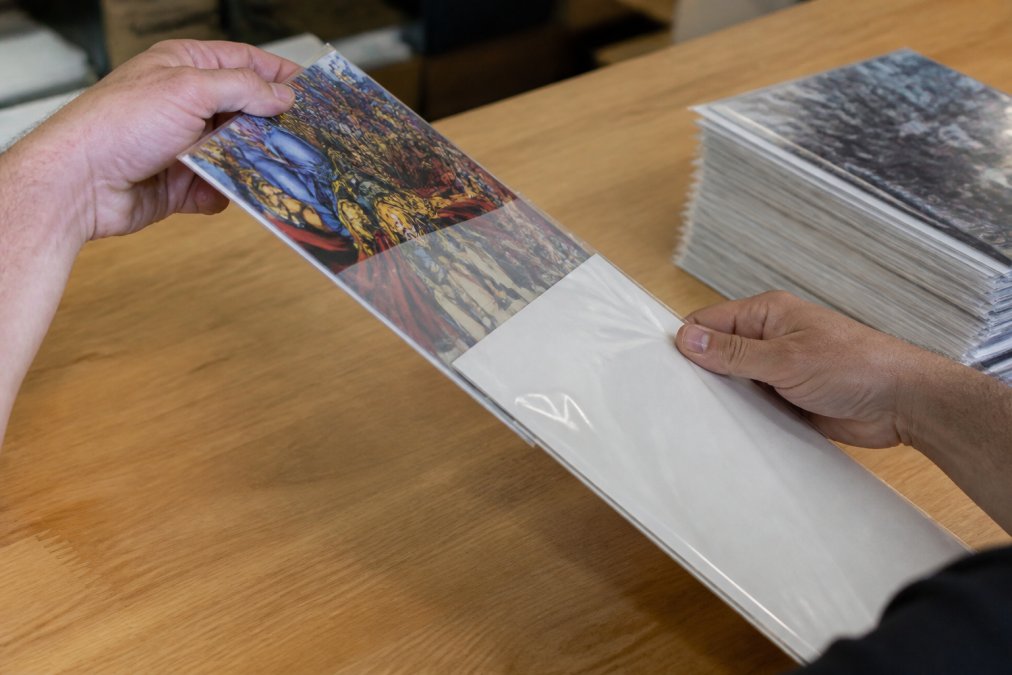
Bagging and boarding protects every book from handling damage, moisture, and shelf wear. This is the single highest-value habit in collection management, and it takes minutes per book once you have a rhythm.
Step 3: How to Track Comic Book Collection Data
To track a comic book collection properly, record four fields for every book: title, issue number, condition grade, and storage location. That minimum set answers the two questions collectors ask most, "do I already own this?" and "where is it?"
Step 4: The Best Comic Book Storage Supplies for Your Budget
The best comic book storage supplies balance protection against cost, and you do not need to buy everything at once. Prioritize bags and boards for your highest-value books, then work outward.
Budget-Friendly DIY Organization Tools
You can cut costs without cutting protection. Repurpose sturdy cardboard shipping boxes as short boxes, cut dividers from acid-free cardstock, and label everything with painter's tape that peels off cleanly. These DIY options work well for overflow storage.
Step 5: Shelving and Space-Saving Strategies for Small Rooms
Most organizing guides assume a dedicated room. If you are working with a studio, a shared apartment, or a single closet, the constraint is not how many books you own, it is how much floor area you are willing to surrender. The fix is to build upward and to standardize on one box size so your shelving math stays simple.
Start with the box, then buy the shelf
Short boxes are the apartment-friendly default. A standard short box holds roughly 150 to 175 bagged and boarded comics, and a full one weighs in the neighborhood of 20 to 25 pounds, heavy enough to need real support, light enough for one person to lift off a high shelf. Long boxes hold roughly twice that, but a full long box can exceed 40 pounds and is awkward to pull down from height.
Vertical strategies that actually work in small rooms
- Wall-mounted track shelving. Adjustable standards and brackets let you set shelf heights to your exact box dimensions instead of wasting the dead space above a fixed shelf. Anchor into studs; a loaded shelf of short boxes can easily exceed 100 pounds.
- Over-door and over-closet racks. Good for the current reading stack, not for long-term storage, heat and door traffic make them a poor home for anything valuable.
- Under-bed boxes. Flat rolling bins work for oversized books, omnibuses, and magazines that do not fit standard comic boxes. Keep them in acid-free bags and add a silica packet.
- Closet vertical stacking. Stack short boxes no more than three high and never stack long boxes more than two high. Beyond that, the bottom box crushes and the lid bows.
Rotate the display, store the rest
Pick one shelf at eye level for face-out display of a rotating set of favorites, and keep everything else spine-out or boxed. Face-out display costs you roughly three to four times the shelf space per book, so treat it as a curated exception, not a storage method. Swap the display every few months so nothing sits in light long enough to fade.
When you truly run out of room
If your collection has outgrown every wall in the apartment, the honest options are: cull duplicates and low-condition readers, move the long-term hold to a climate-controlled storage unit, or shift the bulk of your reading to digital and keep only keys and favorites physical. A storage unit is a real monthly cost, so run the math against the replacement value of what you are storing before committing.
Step 6: Climate Control and Long-Term Preservation
Most organizing guides stop at aesthetics. The technical side, the part that determines whether your books are still worth anything in twenty years, comes down to controlling three variables: temperature, relative humidity, and light exposure. Library and archival preservation guidance consistently points to the same targets, and they are achievable in a home without special equipment.
The targets to aim for
- Temperature: Keep the storage area stable, ideally in the 65-70°F range. Stability matters more than the exact number. A closet that swings from 60°F to 85°F every day does more damage than a steady 72°F.
- Relative humidity: Aim for 45-55%. Below 40% and paper becomes brittle; above 60% and you invite mold, foxing, and rust on staples. A cheap digital hygrometer, the kind sold for reptile terrariums, costs very little and tells you what you are actually dealing with.
- Light: Ultraviolet light fades inks and yellows paper permanently. Keep displayed books out of direct sun and away from fluorescent tubes, which emit UV. LED lighting is the safe choice for a display shelf.
Why paper degrades
Comic book paper is made from wood pulp and contains lignin, which breaks down over time and produces the yellow-brown discoloration collectors call foxing. Acidic breakdown accelerates with heat and moisture. This is why acid-free bags, boards, and boxes matter, they do not stop the chemical clock, but they remove an additional acid source and slow the reaction.
Practical setup for a home collection
- Store boxes off concrete floors. Concrete wicks moisture and stays cold; a simple wooden pallet or plastic riser solves it.
- Keep boxes off exterior walls, which are the coldest and dampest surfaces in most homes.
- Do not store in attics, garages, or unfinished basements. These spaces have the widest temperature and humidity swings in the house.
- Add silica gel packets to closed boxes in humid climates, and recharge or replace them every few months. They are a supplement, not a substitute for a dehumidifier in a genuinely damp room.
- Run a small dehumidifier in the storage room if your hygrometer consistently reads above 60%. Empty the reservoir on a schedule or plumb it to a drain.
- Keep books vertical and snug but not compressed. Overstuffed boxes bow spines; loose boxes let books slump and warp.
Long-term storage vs. long-term display
Display and preservation are in tension. A face-out book on a sunlit shelf is a fading asset. The workable compromise is to display a rotating set of lower-value or already-graded books, and keep your keys, first appearances, and high-grade runs boxed in a dark, stable closet. If you want to display a valuable book, use a UV-filtering frame or case, they are widely available and cut most of the damaging spectrum.
A simple monitoring routine
Check your hygrometer monthly, replace silica packets quarterly, and do a visual inspection of stored boxes twice a year for any sign of moisture, pest activity, or warping. Catching a humidity problem in month two is a cheap fix; catching it in year two usually means lost books.
Library of Congress preservation guidance on paper-based collections
Common Mistakes to Avoid When You Organize Comic Book Collections
The most damaging mistakes are the quiet ones: storing books flat in tall stacks, mixing protected and unprotected books in the same box, and skipping the inventory step entirely. Each one costs you either money or condition.
Frequently Asked Questions
Should comic books be stored vertically or horizontally?
Store comics vertically, like books on a shelf. Stacking them horizontally puts pressure on the spines and covers, which leads to spine roll and creases over time. Use a long box or short box with the comics standing upright and packed snugly enough that they do not lean or slump. If you must stack temporarily, keep the pile short and rotate the bottom books out regularly.
What is the best way to bag and board comic books?
Use acid-free, archival-quality bags and boards. Insert the board behind the comic with the glossy side facing the back cover, then slide both into the bag and press out excess air. Seal with tape on the bag's flap, not on the comic. For valuable issues, use mylar bags instead of polypropylene, since mylar lasts longer and will not yellow or off-gas over decades of storage.
How do I organize my comics: by title, character, or publisher?
Pick one primary system and stick with it. Alphabetical by title is the easiest to maintain and find books quickly. Publisher-based sorting works well if you collect heavily from one or two publishers. Character or team sorting makes sense for focused collections, like X-Men or Batman runs. Whichever you choose, keep a simple inventory list so you can locate a specific issue without pulling every box.
Are comic book collections worth anything if they aren't graded?
Yes, ungraded comics still hold value, especially key issues, first appearances, and complete runs. Condition drives most of the value, so proper bagging, boarding, and climate-controlled storage protect what you have. Grading can increase resale value for high-grade keys, but it costs money and takes time. For most collections, good storage and an accurate inventory matter more than grading every book.
Organizing a collection is a project that never truly finishes, because new issues keep arriving. Ron's Comic Closet helps collectors stay ahead of that flow with a subscription and pull-box service, a deep back-issue selection for completing runs, and bulk discounts for larger orders. Get started with Ron's Comic Closet and keep every series organized from the first issue onward.

